
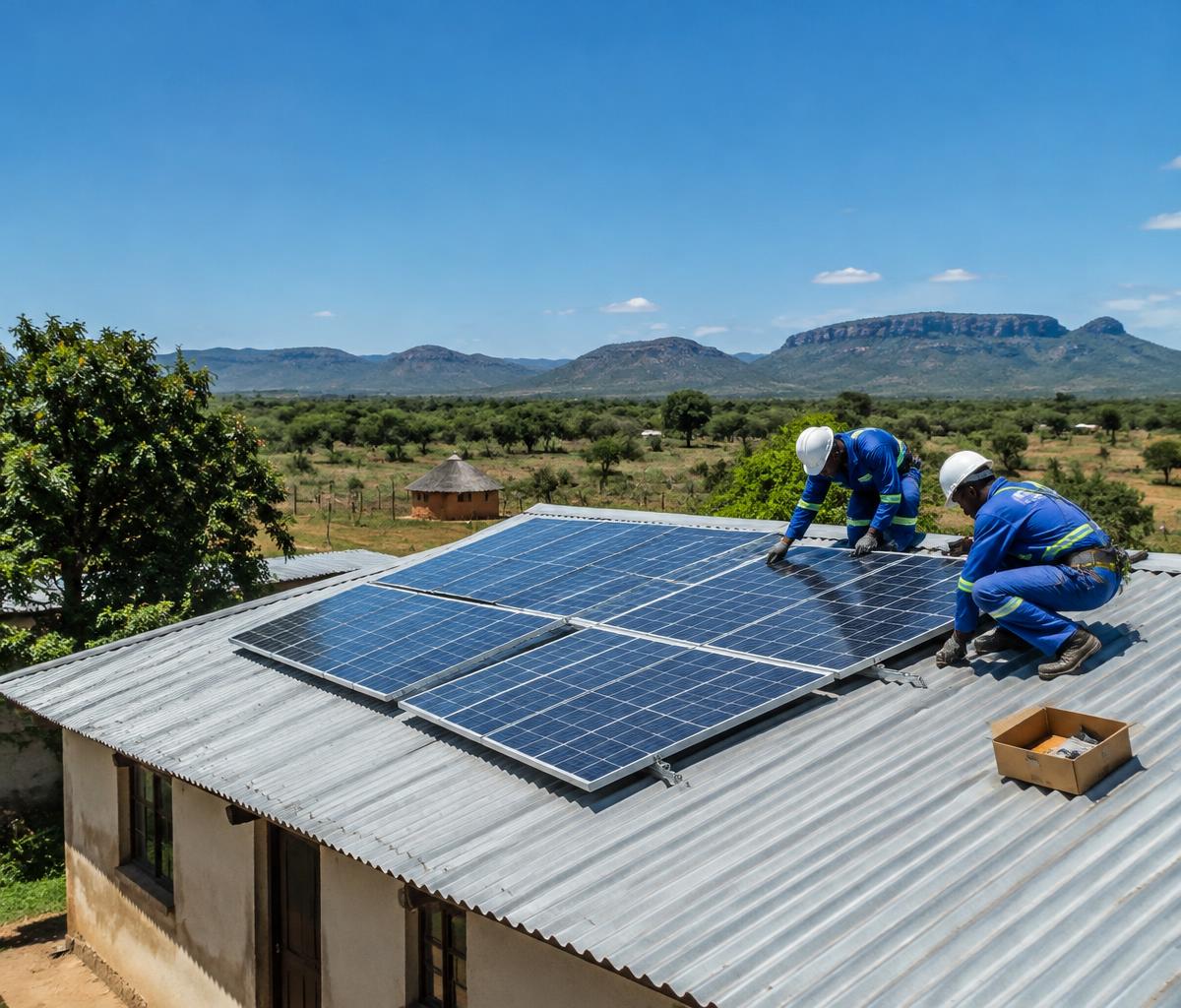
Grid-tied: solar working alongside the grid
Panels supply electricity through an inverter while the utility grid remains available. These systems can reduce daytime grid consumption. Exporting surplus electricity depends on local rules and the approved connection; do not assume export payments are available. A normal grid-tied inverter shuts down during an outage to prevent energising utility lines.
Off-grid: independent power
An off-grid system supplies a property without relying on a utility connection. Batteries generally provide power at night, and a generator may support long periods of poor solar production. The system must cover energy demand and peak loads through the conditions it is designed for. Careful load management is especially important.
Hybrid: solar, batteries and grid together
A hybrid arrangement can combine solar production, storage and grid supply. Not every hybrid inverter automatically powers an entire property in a blackout. Outage backup needs the appropriate backup output, isolation equipment and circuit arrangement. Ask exactly which appliances will remain on, for how long, and whether generator integration is supported.
Choose around your actual priorities
For daytime consumption with a reliable grid, a grid-tied arrangement may be appropriate. For a remote property, consider an off-grid design. For essential-load backup where the grid is available but unreliable, evaluate a suitable hybrid system. The final choice needs a load assessment, equipment compatibility checks and a qualified installation.
- Panels produce energy; batteries store it.
- Inverter capacity limits simultaneous loads.
- Backup performance depends on battery capacity and the loads connected.
Further reading
General educational information. Site conditions and equipment specifications vary; seek a qualified assessment before installation.