
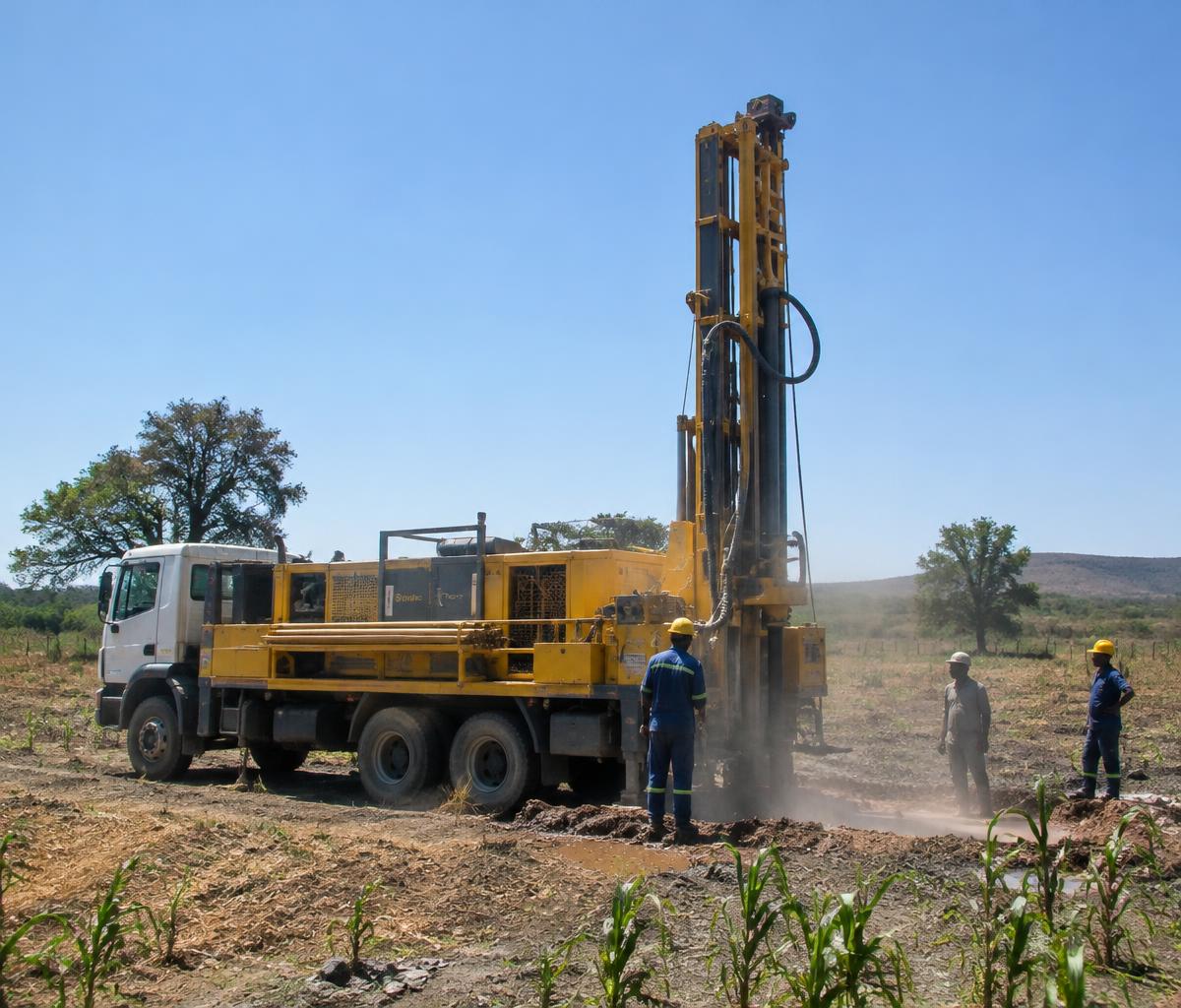
1. Understand the site and your water needs
Start with how much water you need and what it will be used for: a household, livestock, irrigation or a business. A hydrogeological assessment considers local geology, existing borehole records and site conditions. Geophysical methods may help identify promising positions, but a survey is not a guarantee of water.
2. Prepare access and agree the scope
The rig needs safe access and working space. Before mobilisation, agree how drilling depth will be approved, what casing is included and how unexpected conditions will be handled. Check applicable local water-use requirements with the responsible authority before proceeding.
3. Drill and complete the borehole
The drilling method depends on the ground conditions. As the hole advances, the team records changes in the formations and water strikes. Suitable casing supports unstable sections; screens and gravel packing may be needed in some aquifers. Completion design should prevent surface contamination and suit the formations encountered.
4. Develop, test and select the equipment
Development removes debris and helps the borehole perform properly. A pumping test measures how water level responds to extraction and recovers afterwards. These results help establish a sustainable operating rate and select a pump; the depth of the hole alone does not tell you its yield.
5. Check water quality and hand over
Test the water before drinking and choose any treatment from the results. Keep the drilling log, completion details, pumping-test report and water analysis. Protect the borehole head and arrange appropriate servicing.
- A water strike is not proof of a reliable supply.
- A deeper borehole is not automatically a better borehole.
- Water quantity and water quality are separate checks.
Further reading
General educational information. Site conditions and equipment specifications vary; seek a qualified assessment before installation.