
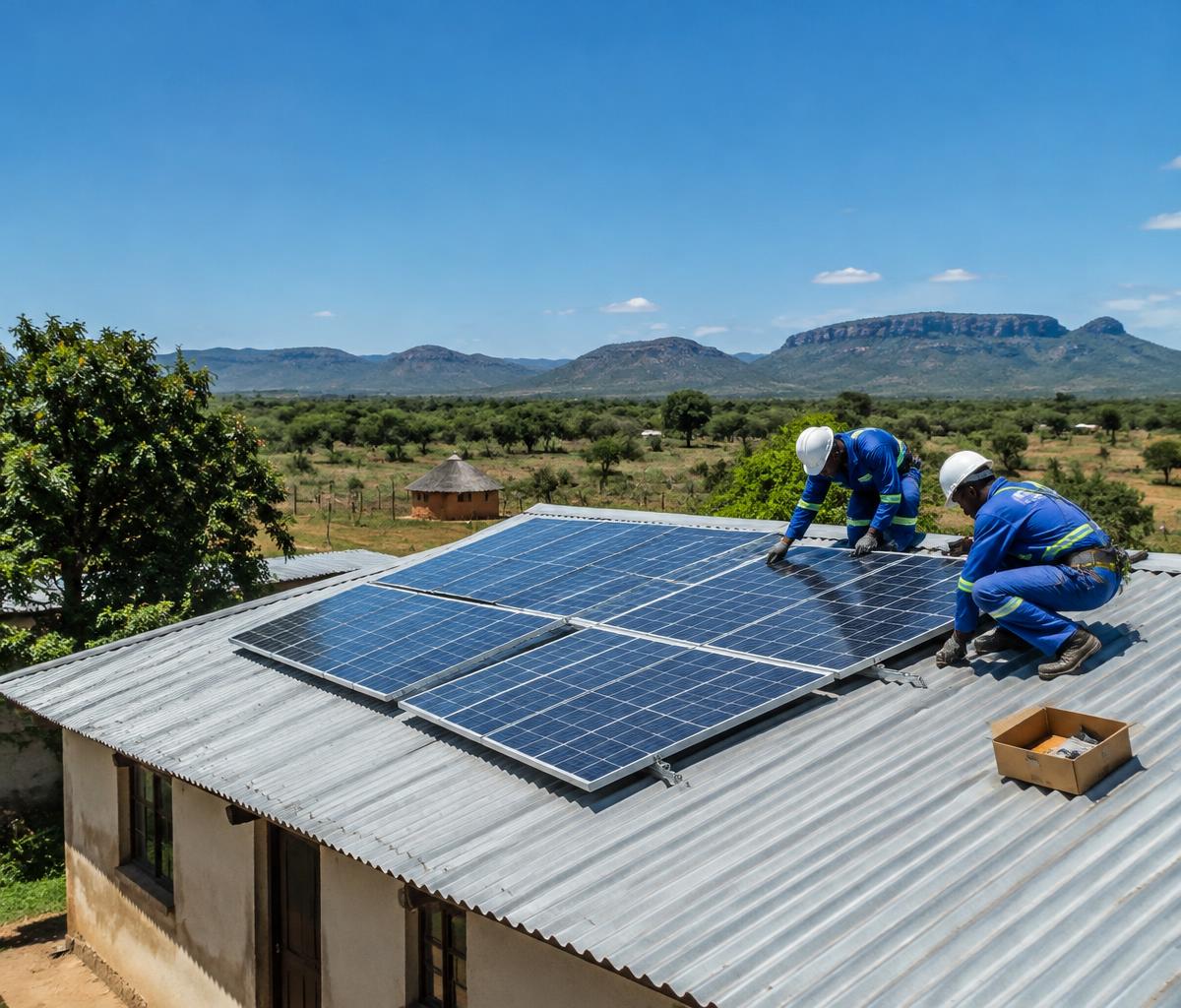
From sunlight to usable electricity
Photovoltaic cells convert sunlight into direct-current electricity. An inverter converts that into alternating current for ordinary appliances. A suitable charge controller or inverter manages battery charging in a storage system. Protection, earthing and correctly sized wiring are essential parts of an installation, not optional extras.
Power and energy are different
Power, measured in watts or kilowatts, is how much an appliance draws at a moment. Energy, measured in kilowatt-hours, is power used over time. A 100-watt appliance running for 10 hours uses 1 kWh before system losses. This is an illustration, not a recommended system size.
Build an appliance list first
Record each appliance's power rating, how long it runs and whether it must work during an outage. Fridges, pumps and other motors can have a starting surge that is higher than their running power. Decide which loads are essential and which can wait until the grid returns.
- Daily energy use informs panel and battery sizing.
- Simultaneous loads and motor surges inform inverter sizing.
- Shading, panel direction, temperature and losses affect output.
Size batteries for usable backup
Battery nameplate capacity is not all available at the socket. Usable capacity depends on permitted discharge, conversion losses, temperature and ageing. Specify the loads and hours you need covered, then check the battery's usable energy and power limits. A large inverter with a small battery does not provide long backup.
Check the design, not just the package label
Ask for the equipment models, expected operating limits, warranty terms and a clear list of backed-up circuits. A panel wattage rating is measured under standard test conditions; actual production changes during the day and across seasons. Have a qualified installer assess your site rather than selecting a package from a single headline number.
Further reading
General educational information. Site conditions and equipment specifications vary; seek a qualified assessment before installation.