
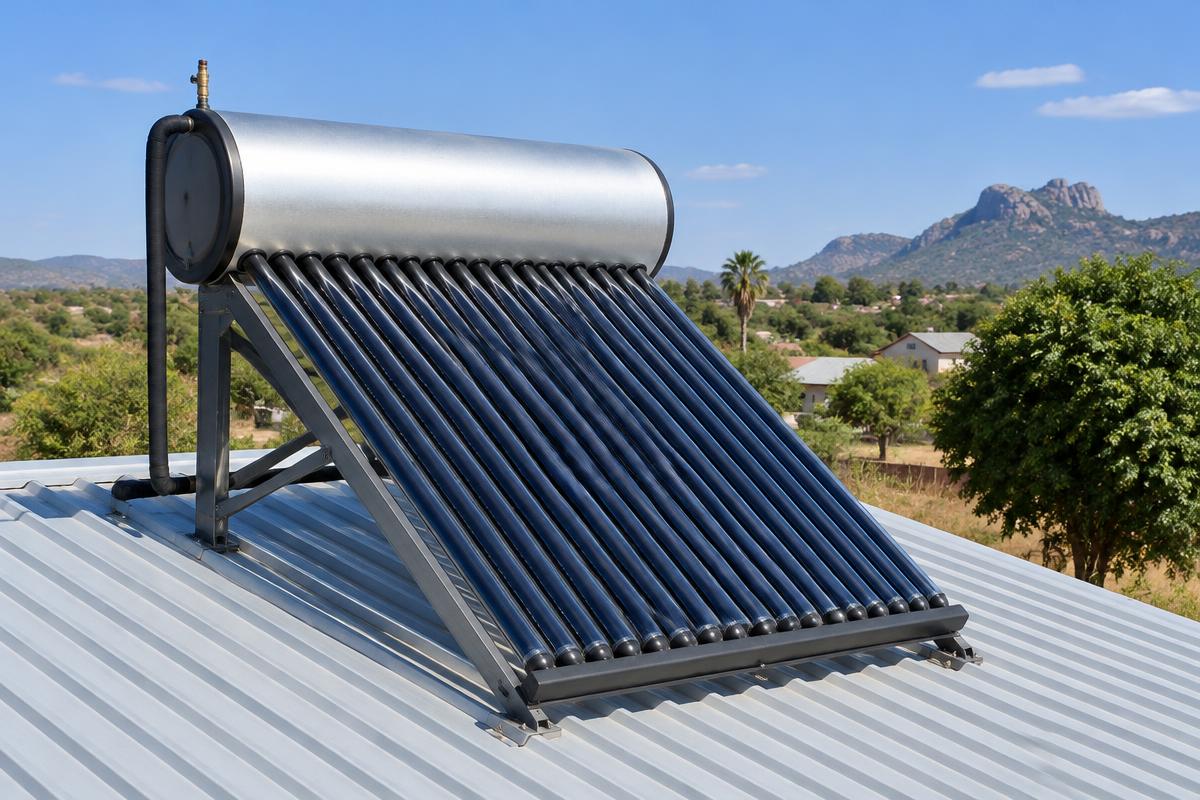
Solar thermal heats water
A solar geyser uses thermal collectors to transfer heat from sunlight to water. The arrangement may use direct circulation or a heat-transfer fluid, depending on the design. It does not produce electricity for your lights, fridge or sockets.
Photovoltaic panels generate electricity
PV panels produce electrical power that can run household equipment through a suitable inverter. They can also supply an electric water heater if the whole system is designed for the load, but resistance heating can consume substantial energy and affect battery backup.
Flat-plate and evacuated-tube collectors
Flat-plate collectors absorb heat through a covered absorber plate. Evacuated-tube collectors use insulated tubes to reduce heat loss. Which is appropriate depends on climate, water quality, installation conditions, serviceability and the specific equipment — not just the collector's appearance.
Plan for hot-water demand and low-sun periods
Select capacity around the people and hot-water uses in the property. Check roof structure, pressure compatibility, plumbing protection and maintenance requirements. Some systems use an electric backup element when sunshine is insufficient. Discuss how that backup will operate during power cuts and how it fits your electrical budget.
Further reading
General educational information. Site conditions and equipment specifications vary; seek a qualified assessment before installation.