
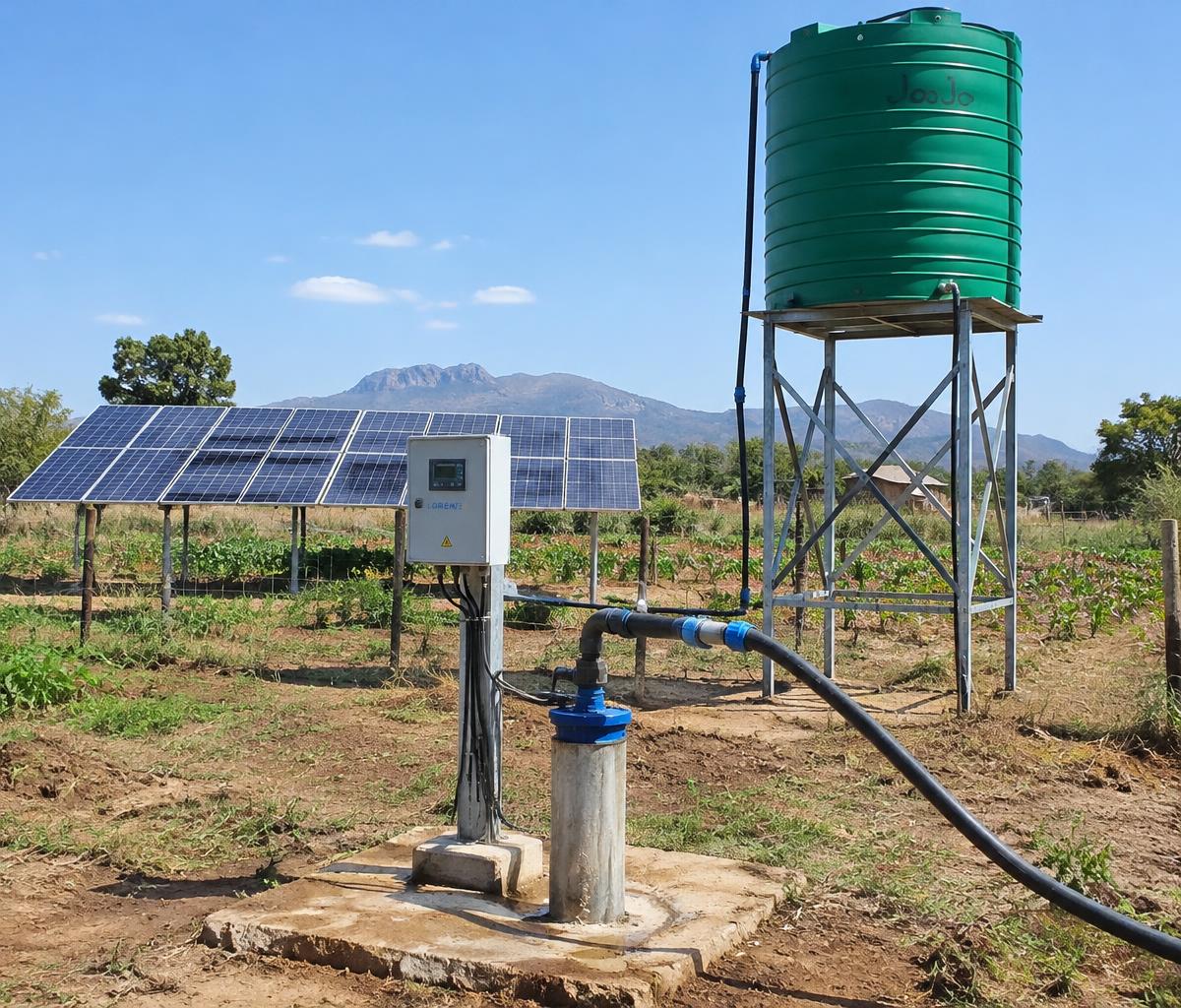
How direct solar pumping works
Panels supply a compatible pump through a suitable controller. Output changes with available sunlight, so pumping is usually strongest in good daytime sun. Many systems store water in a tank instead of storing electricity in batteries. The controller and pump must be designed to work with the panel array.
Start with water demand and borehole performance
Estimate daily water demand and use pumping-test results to determine what the borehole can sustainably supply. Pump selection considers required flow and total dynamic head: water lift, elevation to the outlet and friction in pipework. Choosing by borehole depth alone is not enough.
A tank provides flexibility
Stored water can serve evening or early-morning demand after solar production stops. The tank volume depends on water use, refill opportunities and the reserve needed. An elevated tank may provide gravity pressure, but adequate pressure and the structural design of the stand must be assessed.
Protect the pump and the borehole
Include appropriate dry-run protection, tank-level controls, electrical protection and secure pipework. An oversized pump can deplete the borehole faster than it recovers. If night pumping is essential, discuss a compatible alternative supply or a specifically designed battery arrangement rather than assuming panels alone will do it.
Further reading
- US Department of Energy — How does solar work?
- British Geological Survey — Africa Groundwater Atlas
- WHO — Drinking-water
General educational information. Site conditions and equipment specifications vary; seek a qualified assessment before installation.